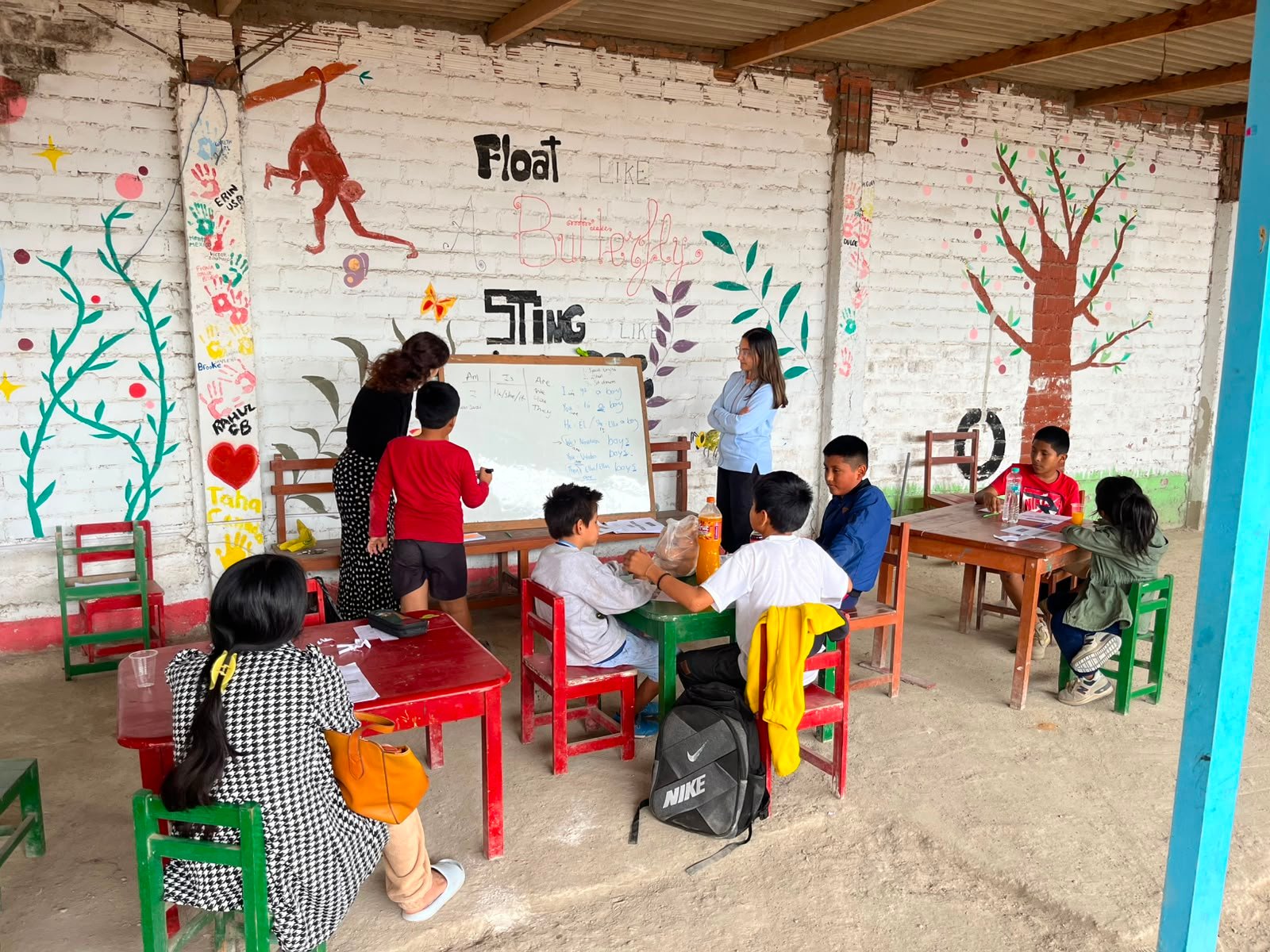
My trip was a tale of two halves. While the first week involved visiting bucket-list sites like Cusco and Machu Picchu, I spent the following two and a half weeks in Lima, working with IVHQ (International Volunteer HQ) to teach English in schools in the district of Pachacútec.
As I spent more time in Lima, I felt the magic of the city gradually sinking in. It felt good to be free and explore everything it had to offer. During a full-day tour of Lima on the Sunday between my return from Cusco and the beginning of the teaching placement, I was fortunate to encounter some of the best spots the city had to offer. Spending a day touring the city with three girls soon became one of my favourite memories.
A whistle-stop tour of Lima’s best neighbourhoods
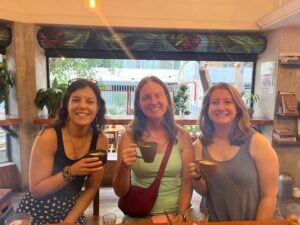
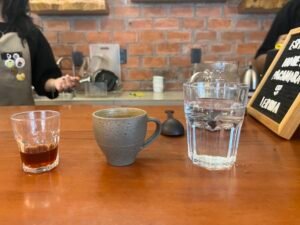
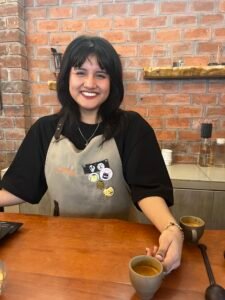
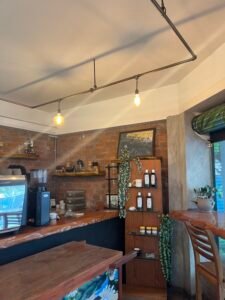
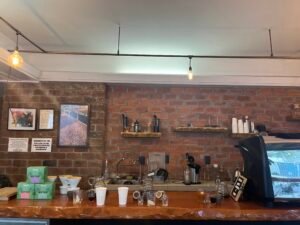
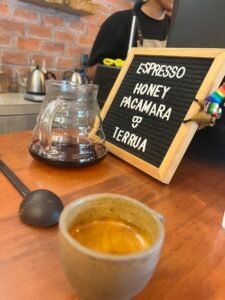
We started off with a coffee tasting at a local café, Terrua Café, which introduced us to all kinds of coffee: honey, coffee with differing hues, cold brews and espresso tonics. It was a beautiful experience: the baristas made them with so much care and attention, and so masterfully, that it felt as though we really got to savour the experience on a Sunday morning.
Though as Brits we enjoyed a good cup of tea, this introduction to the world of coffee felt like we’d entered into something sophisticated. Peruvian coffee is fast becoming one of the most well-known beverages in the world, second only to its Colombian counterparts, so this felt especially memorable.
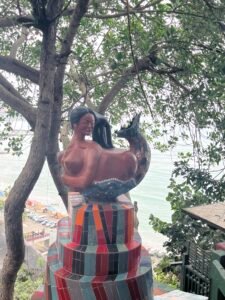
Afterwards we headed to the bohemian neighbourhood of Barranco, where we visited the Casa Victor Delfin – home and studio of one of Lima’s most prominent artists. The entire house and its surroundings felt like a work of art, with every edifice and surface using a different medium. Even more surprising was the fact that the nonagenarian artist was there in his house the day we visited. I had the opportunity to speak with him in my broken Spanish to thank him for his work – that’s a memory I’ll always treasure.
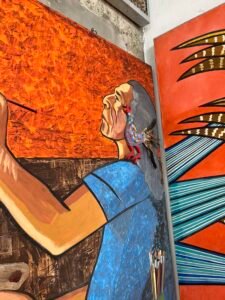
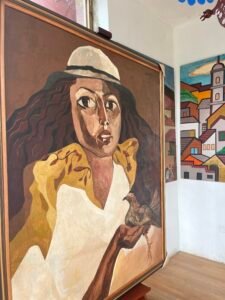
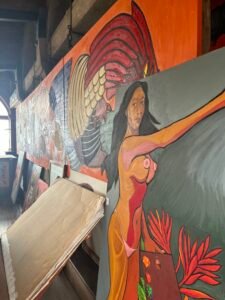
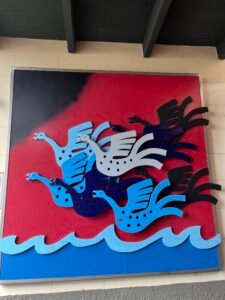
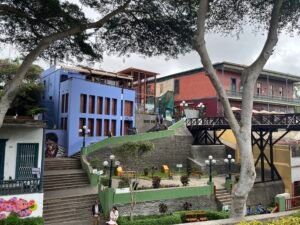
The neighbourhood of Barranco was so colourful and vibrant that I wished I could stay there longer. Lima’s most artistic district, it was decorated with beautiful murals outside and seemed to have galleries, restaurants and cafes on every corner.
To me, Lima contained all my favourite interests: art galleries (Larco Museum, Italian Art Gallery, Gallery of Lima), yoga classes, Parque del Amor, driving along the highway next to the coast at night, cinema with friends. It was honestly the experience of spending time with all these people that made my experience so memorable.
After our vibrant morning in Barranco, we caught an uber across town to Plaza Mayor, otherwise known as Plaza de Armas. This was Lima’s central square, consisting of a government palace, municipal palace, Palació de la Union and a cathedral. We’d arrived on a busy Sunday morning and the place was abuzz with families, tourists and local vendors selling food and drinks.
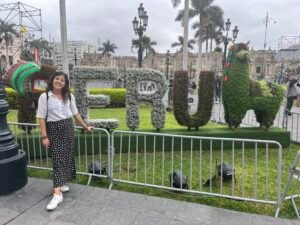
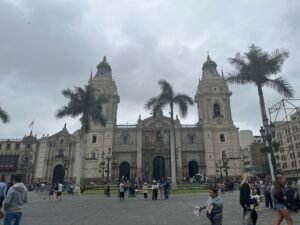
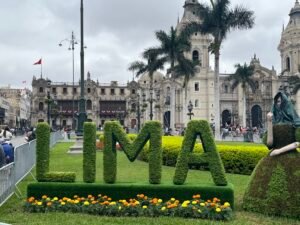
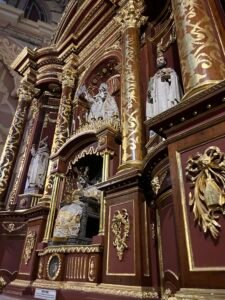
Later that day we also visited the Basílica y Convento de San Francisco de Jesús El Grande, Lima’s famous cathedral, where we witnessed a procession of churchgoers in fabulous costumes, lining up to take part in a ceremony to commemorate Peru’s Independence Day.
Afterwards, we had the opportunity to go inside the eerie underground catacombs. We also visited the Peruvian House of Literature (Casa de la Literatura Peruana), a fantastic, converted railway station that now houses a library and reading rooms, stained glass windows and areas to sit and relax outside.
Just before lunch, we also squeezed in a visit to the Centro Historico, where we saw some statues of the tapadas limeñas (veiled women). These 17th- and 18th-century women became national icons of Peru, dressed with elaborate skirts and veiled so that only one eye was visible, as the Church only permitted women to leave the house unaccompanied if they were completely covered. In disguise, these women became well known in Peru and became symbolic of freedom.
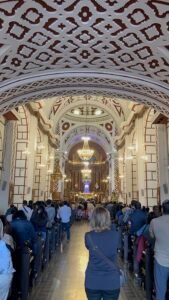
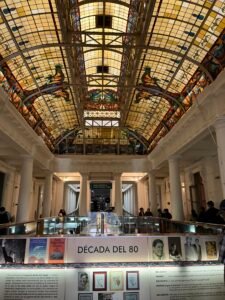
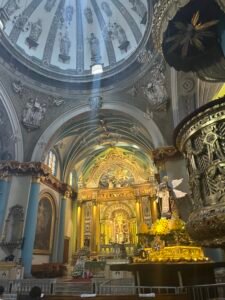
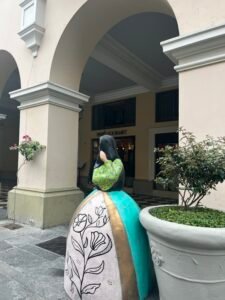
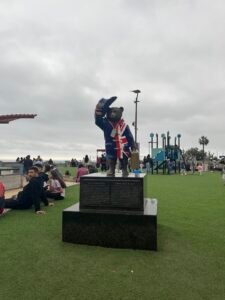
After a day filled with incredible sights, we returned once more to Kennedy Park, and I couldn’t resist a quick visit to see a second Paddington Bear statue in Parque Salazar on the coast, before returning home.
Later in the week with the other volunteers, I’d visit Parque Del Amor on the coast, the outdoor park reminiscent of Gaudí’s outdoor pieces in Barcelona and home to many of the talented Victor Delfín’s creations.
Pachacútec
As mentioned, I had a teaching placement in Pachacútec. To me, it was the most worthwhile part of my trip. We had a long commute into the district – a three-hour round trip from our neighbourhood – and spent weekdays mornings teaching in the community and in primary schools in the neighbourhood.
The district of Pachacútec was formed in 2000 – a social regeneration project run by the government of Lima in an effort to increase commerce and opportunities in this deprived area. Over the last 26 years, Pachacútec has become a thriving community, with schools, banks, markets and other amenities, where families can live their daily lives with access to many necessities.
While we were staying in Lima, we commuted in by bus each day to reach people who lived there, volunteering services such as teaching English (two of us Brits), offering medical services (two US medics and nurses) and helping with childcare (two Italian volunteers) and construction projects in the local community.
Although I’d done a few months of private tutoring in the UK, this was a whole new experience. Myself and other volunteers were put to the test as we found ourselves in front of small classes, then larger ones with up to 30 students. But the most surprising thing about these were how much fun they were!
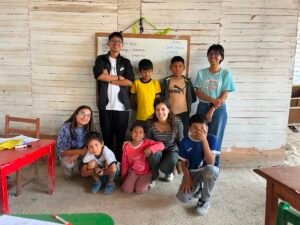
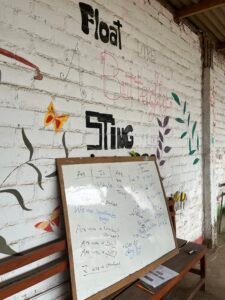
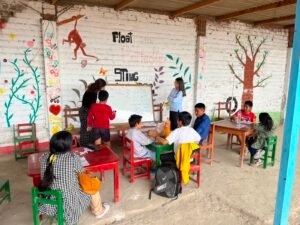
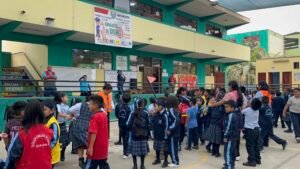
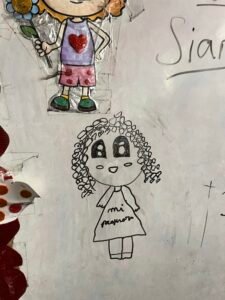
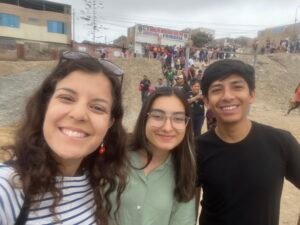
Despite feeling daunted at the start, it quickly turned into a lot of fun preparing for classes, getting to know our students and improving our Spanish as we taught English.
I was surprised by just how much I enjoyed the teaching placement – the coordinators were so helpful and gave a lot of time and attention to the pupils, ensuring we delivered good classes and everyone had fun. We taught British phrases, classroom rules, pets and polar animals. It was so much fun teaching in primary schools and playing card games in the community.
Weekend in Lima: reflections from the Museo de Larco
Around 10 of us lived in a volunteer house and many of us quickly became good friends. The proximity, the shared sense of purpose, shared breakfasts, lunches and dinners, and hanging out in the city after work brought us all together. I have a lot to be grateful for and felt like I met people who shared the same sense of community and purpose that I was looking for. Some of my happiest memories are of nights in Lima together after work, exploring, eating, chatting and trying out new yoga studios, coffee shops, restaurants and cinemas.
By my third weekend in Lima, I was feeling like a local. I’d stayed in two of the city’s neighbourhoods and could easily make my way around by bus with passable Spanish. One weekend, while the other volunteers were away in Cusco, I had time to explore the city. After accidentally visiting an aquarium (which, in my defence, was next to the zoo I’d actually wanted to visit), I headed for the more sophisticated atmosphere of the Larco Museum. A beautiful collection of Inca treasures were well preserved here and the place offered a lovely, serene atmosphere. After an hour or two of taking in the collections, I spent a leisurely afternoon journaling with a coffee in their outdoor restaurant.
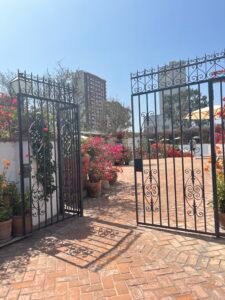
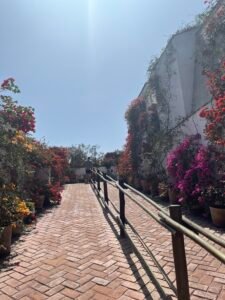
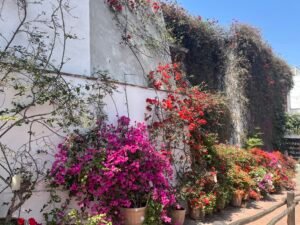
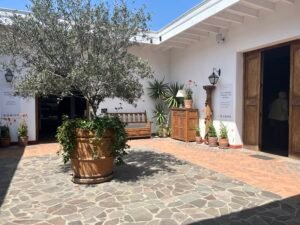
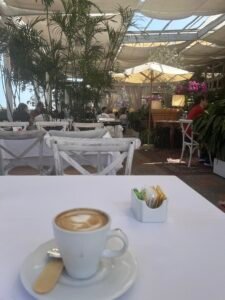
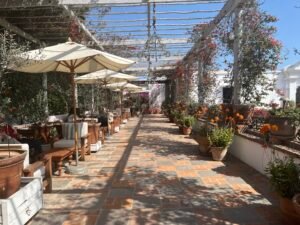
I enjoyed the time to stop and reflect, to enjoy the museum at a slower pace. When everything was so fast-paced, it was nice to go and sit somewhere peaceful, catch up on a bit of writing and take everything in.
Italian Art Gallery, MALI and Plaza dos de Mayo
Afterwards, I attempted to catch a bus to a nearby district (but eventually resorted to an uber after six bus drivers told me they weren’t going in that direction.) I came to the Italian Art Gallery and its neighbour, the Museo del Arte de Lima (MALI), both of which sat near the vast Plaza dos de Mayo. This was a very peaceful afternoon, and I got to take in all the artwork.
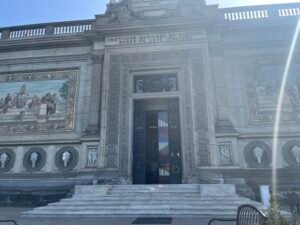
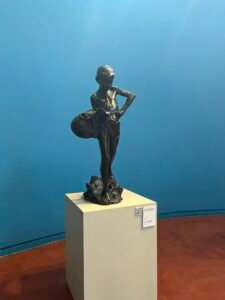
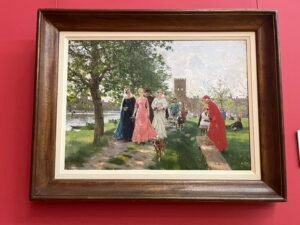
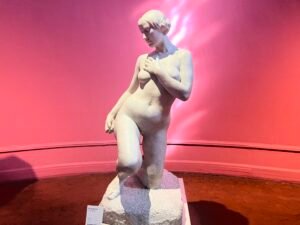
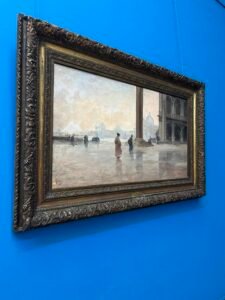
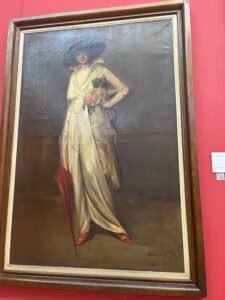
When you’re in an inspiring environment, it’s amazing how much your outlook changes. I spent a lot of that day really enjoying the artwork, including depictions of religious imagery and those of ancient rituals in Cusco. It really was enlightening and I’d always recommend anyone with a free day to spend time in a museum, exploring culture and history in a new city.
I remember thinking, what a way to elevate your everyday thinking. The Spanish Conquest and the subsequent influence of religion played a huge part in shaping this artwork and it was wonderful to have the time and space to reflect on it.
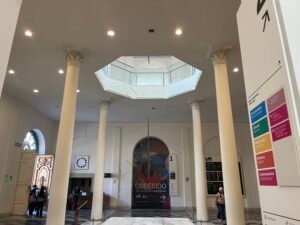
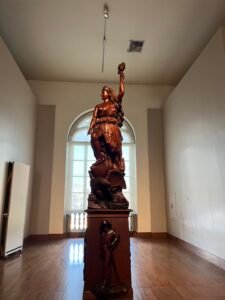
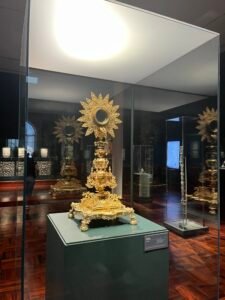
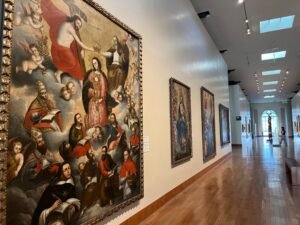
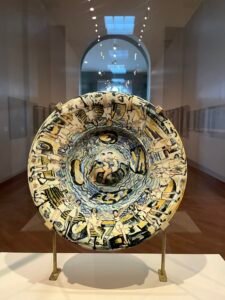
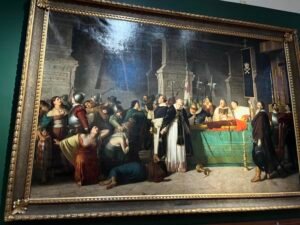
My Saturday night in Lima was fun. I walked back through the nearby Parque de la Exposición, where a sort of carnival was taking place – there was a DJ blaring reggaeton, some of the school groups who’d just left the museum spilling out to enjoy the vibes. From there, I caught the bus back (successfully, this time) and enjoyed a crowded but lively journey home for the 40 minutes or so. In Peru, bus seats are tiny to match the general size, and drivers will play the radio and reggaeton hits. I loved feeling part of a living, dynamic city, and being just one of the thousands who made up its vast crowds.
I had a relaxed evening back at the volunteer house and later could hear my neighbours having a street party until 2am, children and dogs included, everyone laughing and enjoying the music. It was amazing to think how important a sense of community was to the neighbourhood and how safe and comfortable everyone felt to be out having fun into the small hours, whole families included. In the UK I feel like things just aren’t the same as in Latin America!
Peruvian cuisine
It’d be remiss of me not to mention our cook, Natalie, a Peruvian who made wonderful meals for us every day at the volunteer house. I’m so grateful for her cooking and that she kept us all happy and fed. It made the placement go by much more smoothly knowing we had lunch ready-made when we came back at 3pm, famished after an early start and morning of teaching.
I’d also love to share some of the dishes I ate in Lima below. These included verduras y frijoles (vegetables and beans), ceviche, Peruvian fried plantains and arroz con mariscos (seafood risotto). Every meal in Peru was very carb-heavy, often with fries or potatoes (papas) accompanied by rice, a salad and eggs, and portions were always generous.
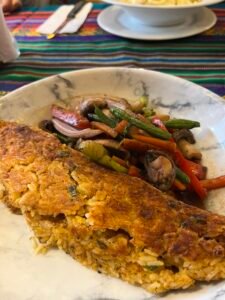
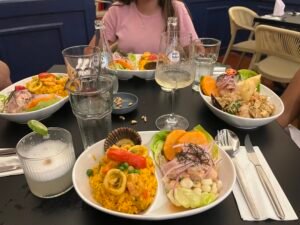
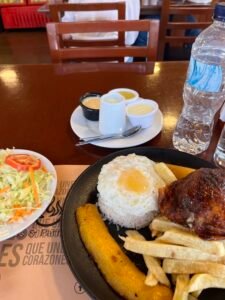
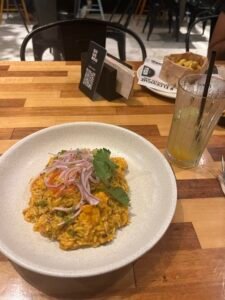
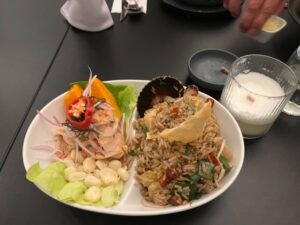
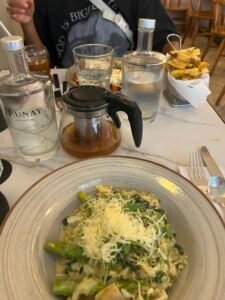
While the effects of altitude in Cusco limited appetites significantly, and where we were cautioned not to drink alcohol in case we’d compound altitude sickness, back at sea level in Lima we could really enjoy the meals and the occasional pisco sour, Peru’s most beloved cocktail, named for a region near Paracas, a few hours away along the south-west coast. I enjoyed the culinary elements of my trip so much that I want to research the perfect ceviche recipe, or the best way to make salchipapas.
So while the second week was jam-packed, it was by no means over and there was still so much to see and do for the duration of my stay in Lima. In my next post, I’ll write about my third and fourth weeks in Peru, spending nights with other volunteers, a trip to Paracas, an eventful final week of teaching and, finally, my journey home. Thanks for coming along for the journey!