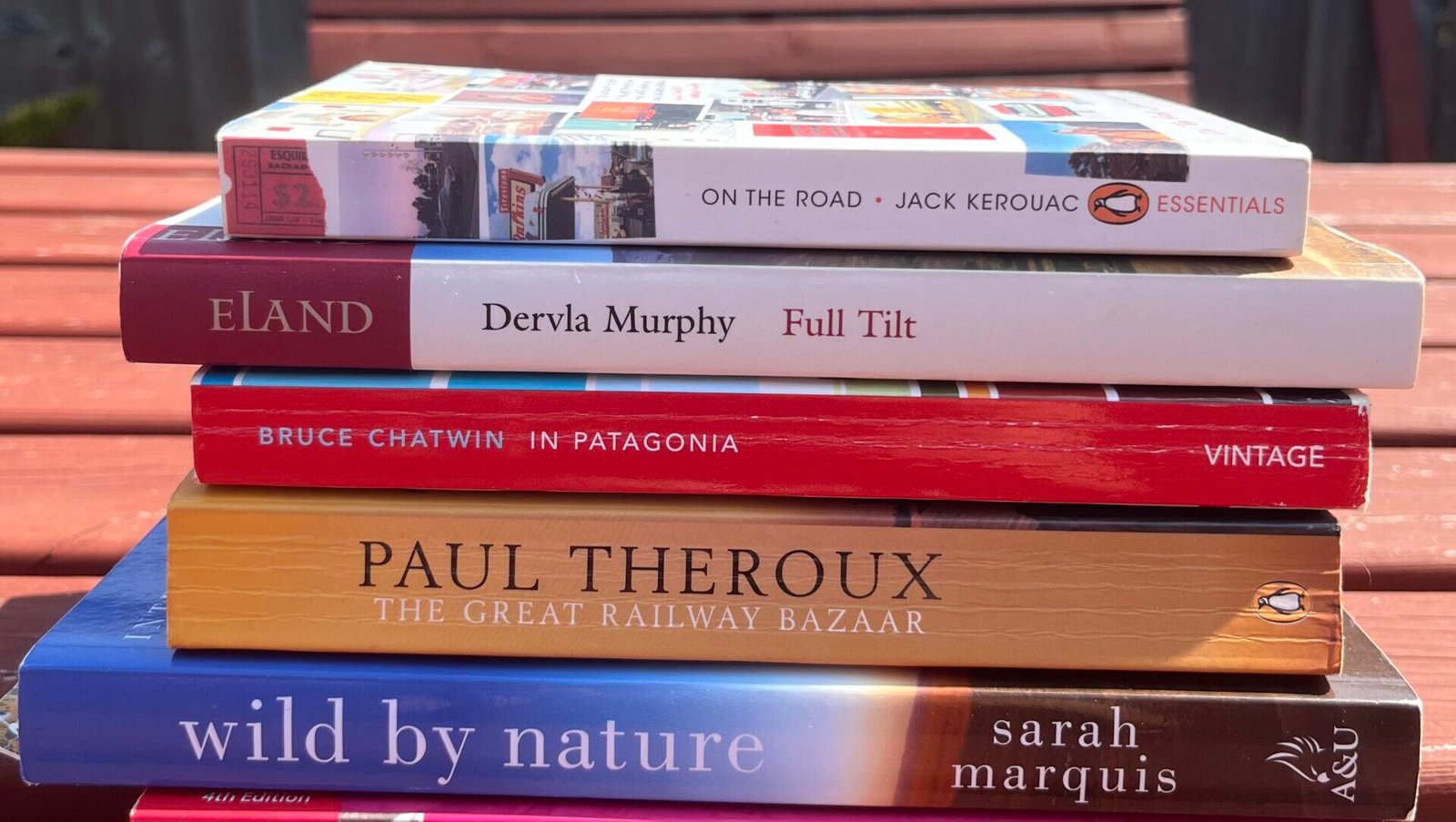
A few of the best travel memoirs to add to your TBR list (and some you should probably avoid!)
Hi, readers! Over the summer so far I’ve been reading a few travel narratives to get me in the spirit of preparing for a big trip I’m taking in two weeks. There’s no end to the number of travel books and blogs available, but here’s a selection of a few that I’ve found notable – or, in some cases, that I think are hugely overrated. I’ll let you know which ones!
Many of these recommendations have come about through my own curiosity and through blogs where writers have suggested delving into some of the classics. And while we spend so much time on short-form social media like Tiktok and Reels, I’m particularly interested in memoirs, stories of people who’ve braved circumstances that our reaction-driven, social media-led world generally discourages.
There’s something about reading the story of a person who’s defied the norms of their community and gone in search of adventure that I find fascinating. Through the challenge, these explorers, adventurers and curious travellers have left behind the comforts of home and written about exploring the unknown, often venturing into dangerous territory, all in search of a good story.
Now that we have the background, here are some of the travel memoirs I’ve been reading this summer. I hope you enjoy the recommendations – let me know what you think.
- On the Road – Jack Kerouac
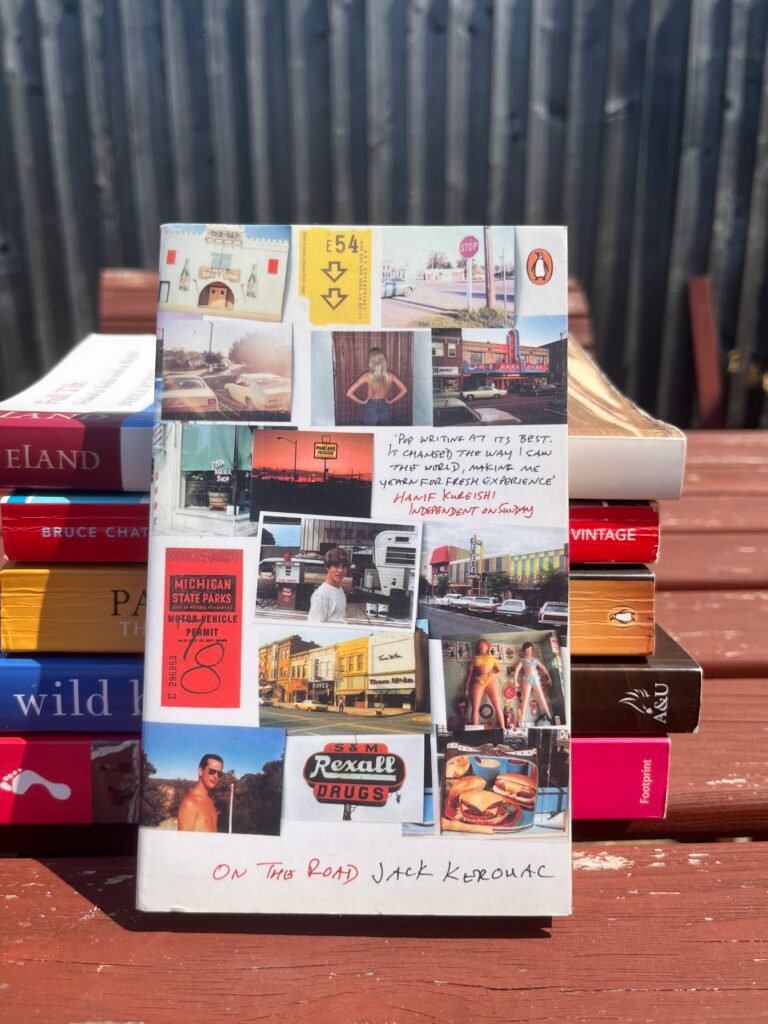
I’m cheating slightly as I first read this book during the summer when I graduated. But it’s an oldie but a goodie, and I love coming back to Kerouac’s work. I was fortunate enough not to have studied this at school, so I wasn’t put off by any kind of preconceptions about literature teachers waxing poetic about its brilliance. Published in 1957, it’s the sort of book that would likely make its way into the curriculum and which I can imagine my teenage students would have little curiosity for in 2026.
Instead, I liked discovering for myself how the characters took a wild and uninhibited road trip across North America, meeting people, drinking constantly, having short-lived flings with locals and generally being free in a way that only 17-year-olds can. Sal Paradise, a character through whom the author expresses his own persona, gets caught up in the world of crazy Dean Moriarty and together they embark on a hedonistic, drug- and music-fuelled journey through the States.
I loved it because, when I read it as a graduate who’d not travelled much, I loved the idea of the freedom they experienced, living vicariously through their travels. It was often humorous and fascinating how they landed themselves in desperate or dire situations and somehow always managed to come back out smiling.
I can imagine Kerouac exhausted a lot of his storytelling capabilities in this breathless and fast-paced story, but he followed up just a year later with The Dharma Bums in 1958 and Big Sur in 1962. It seems travel gives you a lifetime of stories and it’s only a case of finding the right way of telling it to ensure that your stories are passed down.
- The amazing story of the man who cycled from India to Europe for love – P. K. Mahanandia, Per J. Andersson, trans. from the Swedish by Anna Holmwood
I read this after a recommendation from another blog and after reading a few accounts of it online. It’s the unlikely story of a man born into one of the poorest caste systems in India and how he overcame extreme social prejudice in his jungle community, used his artistic talent to progress and enrol on an art course in New Delhi, how he fought starvation and obscurity to carve out a living for himself by drawing tourists on the side of the road. It’s also the story of a young, free-spirited Swedish woman from an aristocratic family who had an urge to travel to India, and about the prophecy that brought them together.
While the story has undergone several layers of translation – Andersson, the translator who wrote up the story from Anna Holmwood’s original Swedish, will no doubt have seen the nuances in this – the story remains one of hope and audacity.
It’s accompanied by lots of humorous notes, including some of the inevitable cross-cultural shocks that P.K. Mahanandia experiences when venturing from Asia to Europe, and how he learns to adapt in a world where his stories are so out of the ordinary.
Some readers might come up against friction when reading about the spiritual elements of the story, but for many it will be a hopeful account of an unlikely relationship between two people from completely different walks of life. Regardless of your stance on this story, it’s worth checking out and deciding whether you believe its reflections on fate and destiny for yourself.
- Full Tilt: Ireland to India with a Bicycle – Dervla Murphy
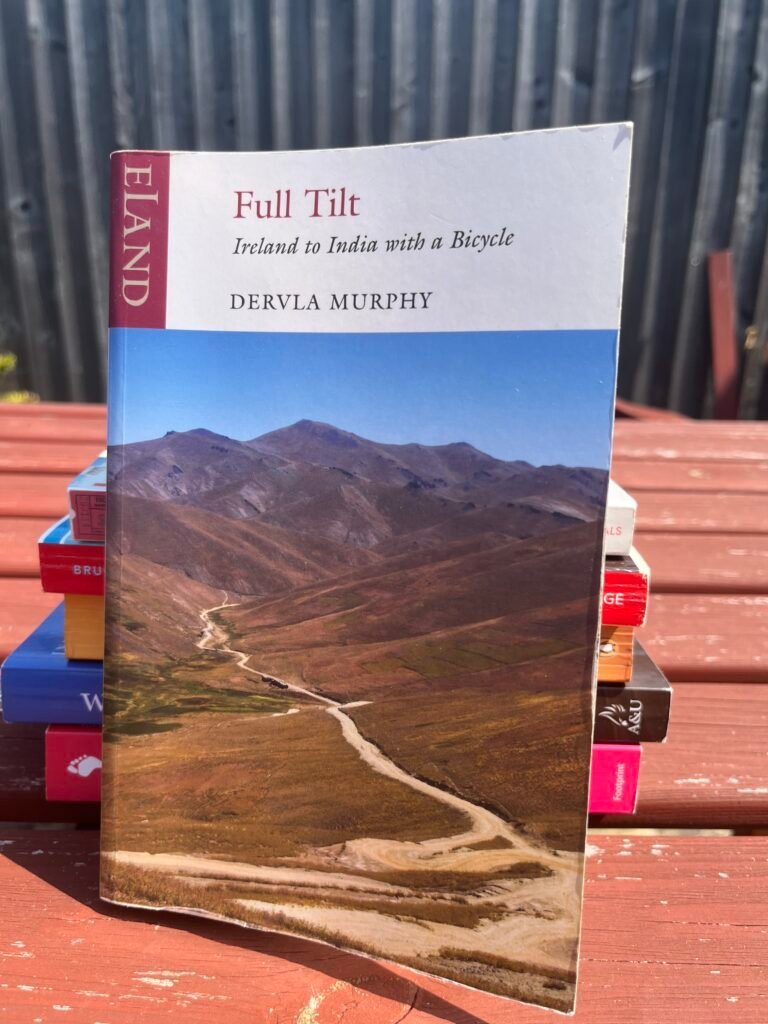
What I loved about Dervla Murphy’s account is that it runs in the opposite direction from P.K. Mahanandia in the previous book. Who’d have thought that two people from vastly different backgrounds would have had the same idea? Granted, Murphy’s was less out of necessity and financial difficulties than a desire to travel she’d had since she was 12 years old, but the stories are remarkably similar.
I enjoyed reading this on a recent trip to London. Having the paper copy gave an element of nostalgia to the whole thing. Murphy’s story is one of courage, tenacity and braving the elements. She described harsh European winters, bemused officials at border points, escaping assault and putting herself at the mercy of kind strangers; as well as her challenges keeping her bike ‘Roz’ in good condition throughout the thousands of miles they trek together.
I found this especially intriguing because the author left Ireland in the 1960s as a single woman in her 30s. She was widely regarded as a person out of step with her time, but I love that she embarked on the journey regardless of what other people might have thought.
She tells stories about hospitable locals in Afghanistan, the culture shock between northern Europe – for example, in one instance she writes about a Dutch couple she meets travelling who, dropped into the alien culture of Afghanistan, find it a complete culture shock. By comparison, Murphy’s slow traverse across mountains and into new territories gradually makes her more accustomed to other nations’ customs and she feels quite at home in Eastern cultures.
She also talks about the difference between the straight-talking men of the Asian nations she visits versus the more conservative customs back home in Ireland. There’s an interesting comparison in which she has a frank conversation with some of the men in Afghanistan after dinner, yet is excluded from eating with the women and children who live there on account of other ‘otherness’. The dissection of these cultural norms is really insightful and shows us how customs might be different between East and West – especially in a more polarised, less globalised world in the 1960s.
Overall I had an excellent time reading Murphy’s account and I’d recommend it to anyone. With warmth, humour and dry wit, she recounts her story, saved from field notes during her excursions.
- In Patagonia – Bruce Chatwin
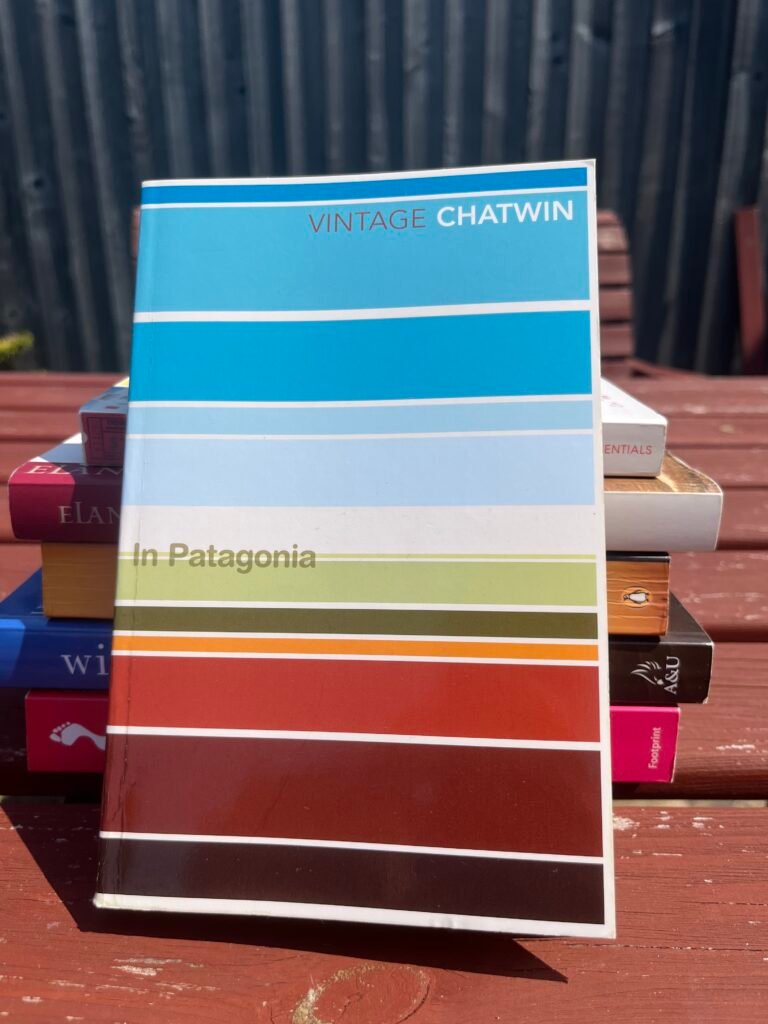
Now, onto a classic. I’ll have to admit that, while I’ve heard that this story made a huge impression on the first-person travel narrative genre, perhaps it felt too remote to have landed fully with me. It was published in 1977 and describes Chatwin’s visits from 1974, but feels like a much older relic. When I was reading this, if hadn’t known the date of publication, I’d have guessed it’d have been written in the 1930s.
As with any good story, it begins with the search for something – in this case, an elusive, missing Brontosaurus bone he remembers from childhood visits to his grandparents’ house. Though, as a teacher corrects him, this was more likely a bone from a mammoth or another prehistoric animal, the tale inspires a love of natural history and curiosity about geography and the world around him.
He writes about his time visiting Argentina and Chile, the area known as ‘Patagonia’, which is in fact a much larger geographical region. Throughout his stories, we learn about the warmth, hospitality and kindness of his hosts.
However, much like Paul Theroux, whose narrative I’ve written about below, I felt that Chatwin’s voice came from the place of a privileged white man who perhaps lacked some of the nuances of describing his visit to a new continent. There are obvious instances of ‘othering’ the people he comes across, and there are disturbing stories about cults and cannibalism in some of the more tribal areas. Now, take this review with a pinch of salt: Chatwin was doing something other writers hadn’t done before and retold his account of visits to a new continent in a way that redefined late 20th century travel writing. However, for me, this is one I’ll need to revisit to fully appreciate what he was doing here.
- The Grand Railway Bazaar – Paul Theroux
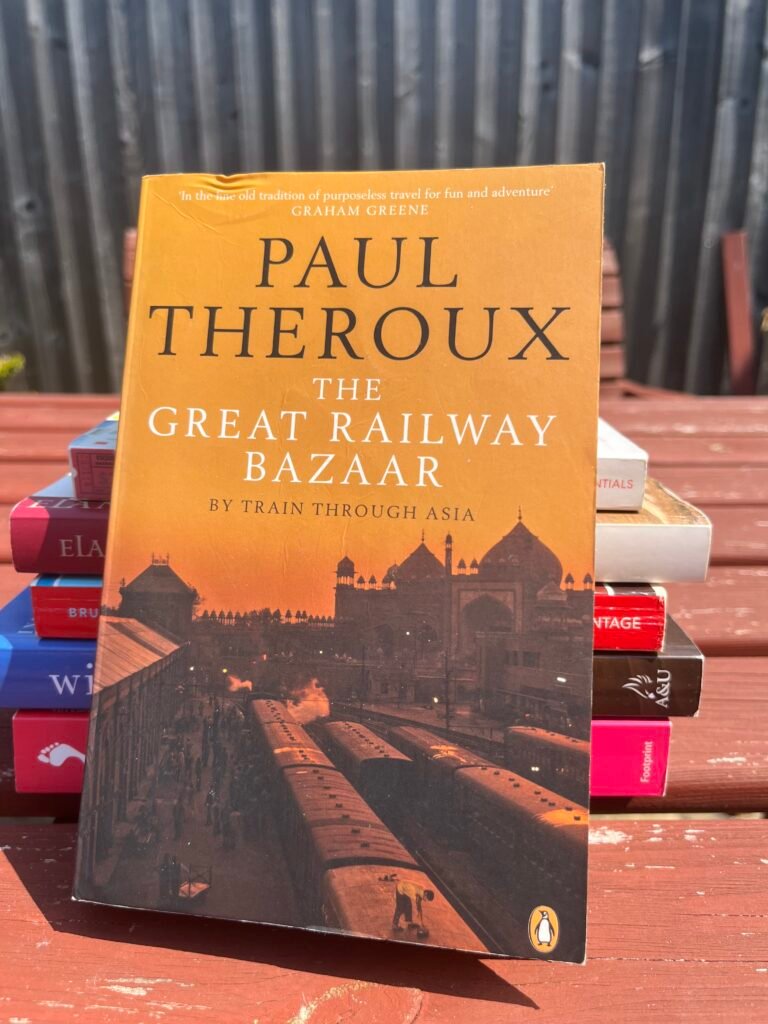
Theroux undoubtedly explores a fascinating route through Europe and into Asia, starting in London, traversing mainland Europe, making his way through Istanbul and into Asia, later on through China and eventually India.
But as I’ve written about Chatwin, I had a bit of a sour taste in my mouth after reading Paul Theroux. Once again, it was written in 1975 and has aged poorly, especially to 21st century readers with more sensitivity to globalisation and with better cultural awareness.
What really put me off this narrative is how contemptuous he is of locals; he’s disrespectful and parochial, especially when it comes to talking about sex workers. What’s even worse is that he writes about his wife and son back home, yet he acts like someone without any ties or responsibilities.
The Goodreads reviews for this story all mention how his tone isn’t celebratory, but, as one reviewer neatly summed it up: Paul Theroux, you miserable bastard. I have to agree! While I wouldn’t recommend it on the strength of the voice, the route Theroux travels is worth studying, and there are plenty of journeys you can plan today that recreate some of these steps, which is fascinating if only to see how the geography and cultures of the places change as he journeys through them.
- Wild by Nature – Sarah Marquis
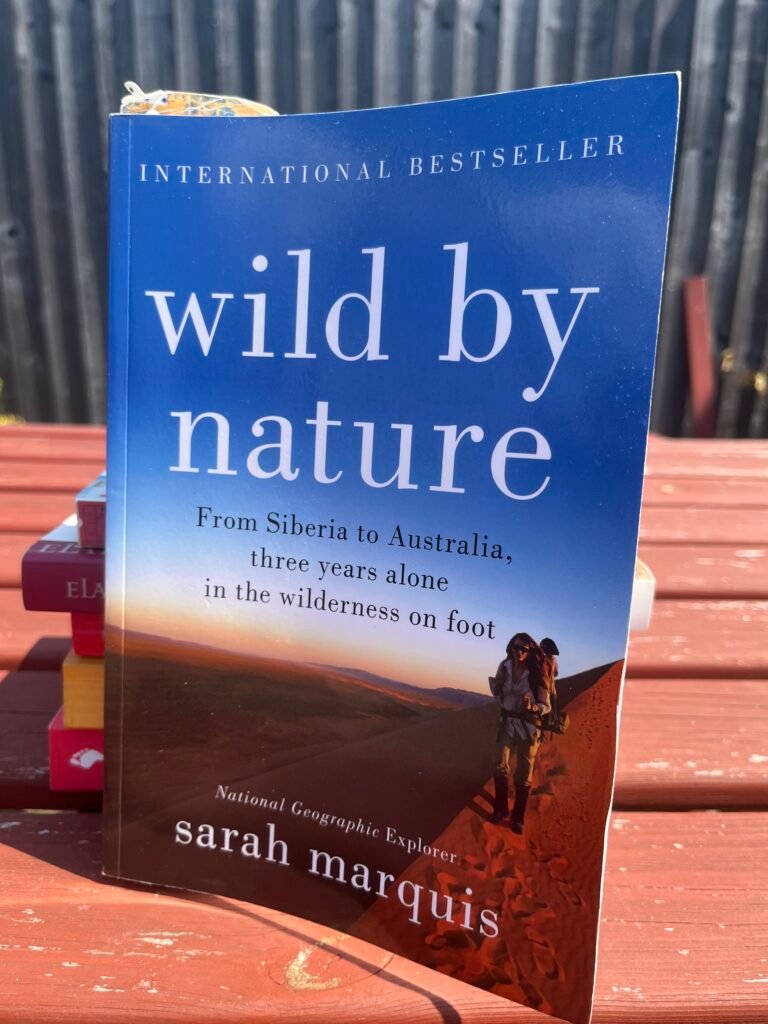
For a palate cleanser, I read a story written in the modern day: in 2011, Swiss national Sarah Marquis decided to embark on a three-year solo expedition. I enjoyed this story from the National Geographic writer who, over the course of her odyssey, traversed Siberia, Mongolia, China, Thailand, a two-week journey on a shipping container to Australia, and the outback in the northern territories.
Marquis writes in detail about her preparations for the trip, including her communication with sponsors via Skype using patchy signal and satellite phones in the middle of the desert. She recounts tales of dengue and malaria in the jungle, and a run-in with thieving drug lords while in a remote camping location. She describes her appearance as frightening to some Mongolian villagers, as she’s regarded as a kind of spirit from folklore heralding a bad omen. And she details the challenges of having an unreliable water and food source every day, of being so far from civilisation and of encountering a nomad way of life.
However, despite the difficulties, it seems that the reward is great. She uncovers a new perspective on life and finds herself able to express herself and communicate with nomads in a way she hadn’t been open to before. For better or worse, she’s able to encounter frightening situations such as camping in the Australian outback (or ‘scrub’) with considerably more ease than her city-dwelling counterparts.
The obvious question, Why?, is one to which she repeatedly refers back. Her answer, To walk, might not satisfy all readers, but it seems to have been enough to propel her forward on her own, solitary pilgrimage. Not everyone will agree with her philosophy on life, but it makes for a unique story.
Overall, I found this to be a quick read, a whole three years summarised in 250 pages. Call it madness or enlightenment, but Marquis does something others haven’t been brave enough to do and conquers a solo expedition with considerable tenacity, grit and determination.
- Peru Guidebook – Footprint
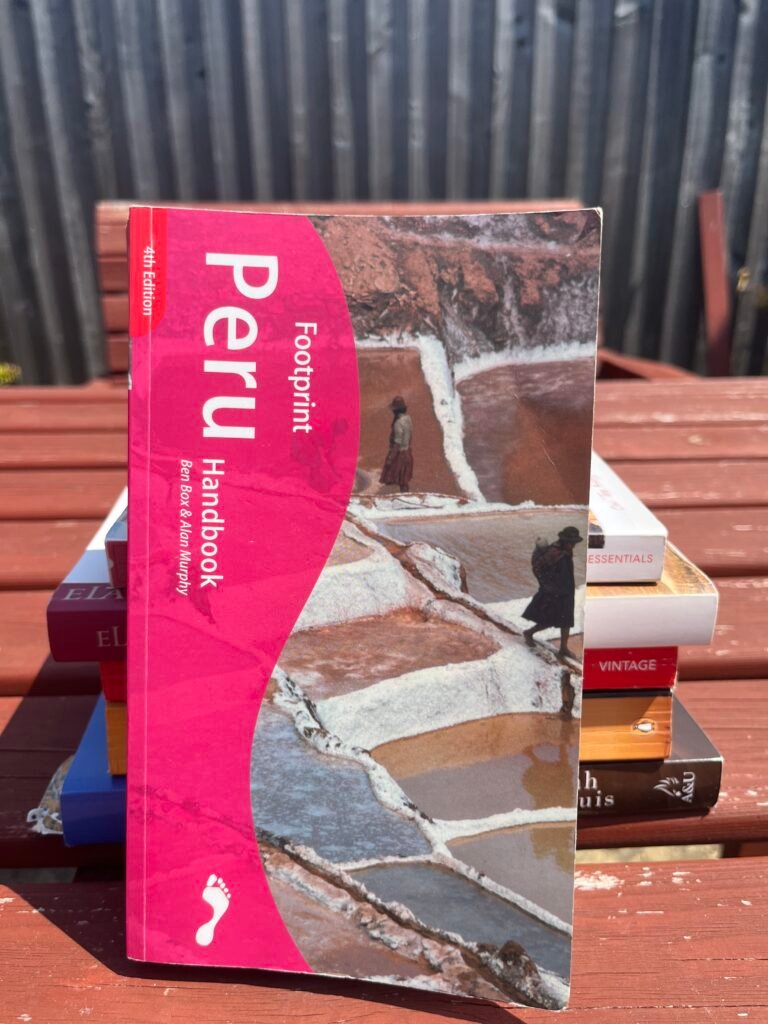
Now, this book is slightly off-piste compared to many of the memoirs and stories I’ve noted here. But I had to include it as I always find the experience of dipping into guidebooks insightful and there’s so much to learn from them. After all, many of them contain stories about the places and some even recount personal tales.
My Peru guidebook was an impulse charity shop purchase and, although it’s an older version. lots of the facts are still relevant. I’m preparing for a big trip at the end of this month and the book includes many useful recommendations about logistics in the specific locations around Peru, like Aguas Calientes, Machu Picchu site, Arequipa and more.
It’s from a big-label imprint, Footprint, who’ve been reliably publishing guidebooks since 1922. So to find a book in this genre from an established publishing house means that you know everything has been fact-checked and updated meticulously.
It’s also quite a nostalgic way of reading: in 2026 you’re more likely to find other recommendations on Insta, Tiktok and even here on Substack, plus on online blogs such as Lonely Planet and National Geographic. But there’s something about having an analogue copy of a book that’s earmarked, that requires no Wifi connection or Kindle charge, and that can help you out when other methods fail, that makes the guidebook one of many exciting ways to prepare for a trip.
What did you think?
I’d encourage any travel writer to read widely to find their own voice and story, and to take these recommendations with a pinch of salt. We might have very different tastes, and that’s ok! But here are a few thoughts on some of the books I’ve read recently and I’d love to hear whether you resonate with these, if you have different opinions or if you have any other recommendations for me… my TBR pile is always growing.
Thanks as always for reading and subscribing, and I look forward to hearing your thoughts.