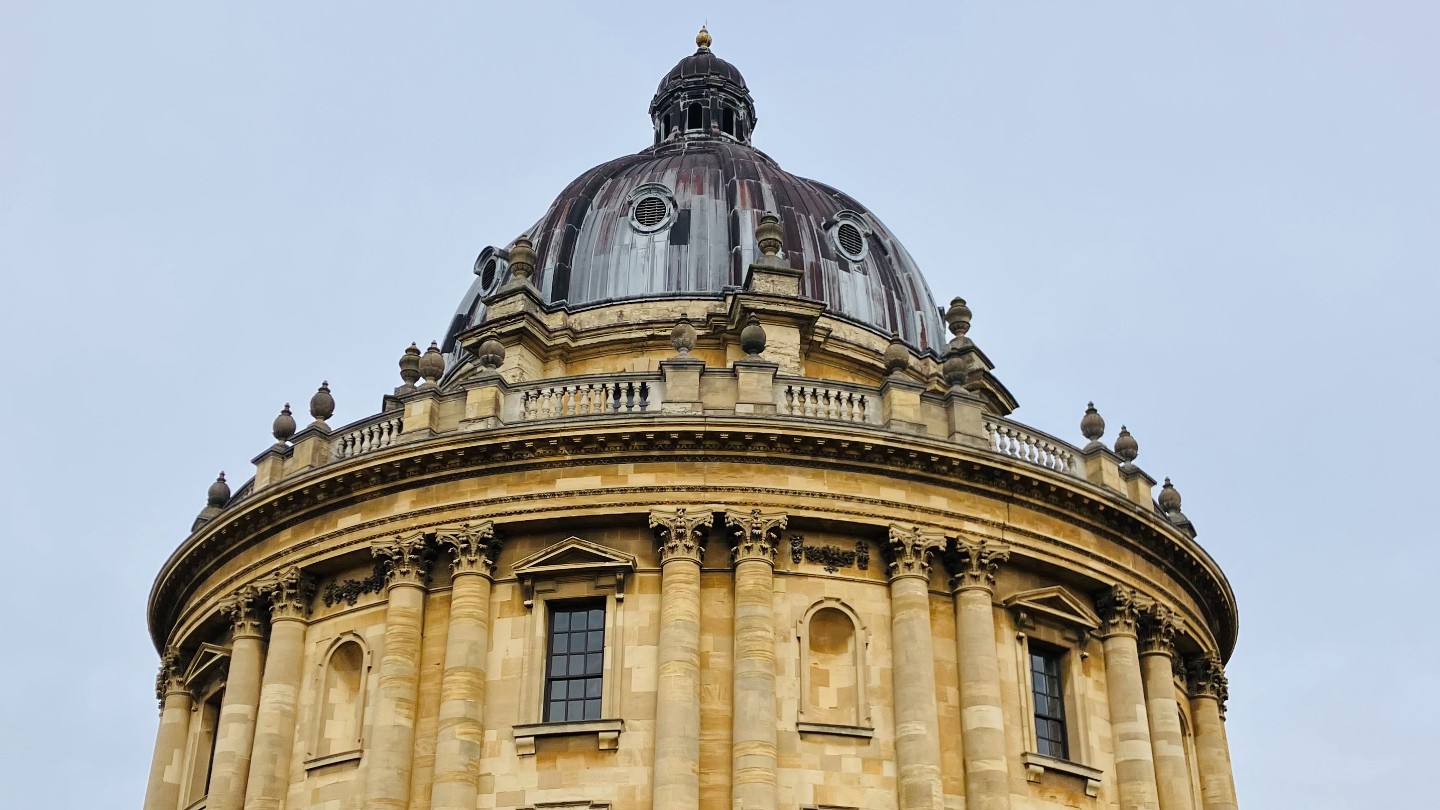
In the UK, you don’t have to travel far to feel like you’ve visited an international city. A melting pot of cultures, languages and an ancient seat of learning set among picturesque ‘dreaming spires’, Oxford is a city that captivates the imagination.
I absolutely love the atmosphere in the city, where you can pass students in shops talking about sentence structures and debating the minutiae of their theses while buying their lunch. It’s a place where ideas feel alive and you wouldn’t feel out of place bringing your reflections on the latest things you’ve read to people you’ve just met.
There are its obvious charms – cobblestone streets, ancient buildings and neatly manicured University parks – which make it feel like the image of an elite British university town that many people will have cultivated. But though the punters and rowing clubs are active along the Isis and Iffey rivers, there are more modern touches to the city that also make it feel like it’s at the forefront of new thinking.
Oxford’s colleges
Alongside its historic colleges, including Magdalen College, home of Oscar Wilde, and University College, short-term home of Percy Bysshe Shelley before his expulsion, there are other places of study alongside those of the most famous alumni. The newer Oxford Brookes university, established in the early 90s across several campuses, has made the dream of living and studying here accessible to students from all walks of life and backgrounds. The result is a cosmopolitan vibe, which feels young and where you’re open to the possibility of meeting anyone.
Over the course of its thousand-year history, the institution of ‘Oxford’, today made up of 43 colleges, has a long and colourful history. I’d recommend taking part in a walking tour of the city (30, 60 or 90 mins, depending on your chosen provider, easily bookable online or in the tourist centre opposite Trinity College) for a detailed and lively history of the ancient university. Within an hour’s driving distance of the Cotswolds, this city is the ideal break for international visitors or even for UK residents looking for culture, history and entertainment on their doorstep.
Oxford’s most notable landmarks include the Bodleian Library, Radcliffe Camera and the Bridge of Sighs at New College. Tours will also grant you access to some of the college grounds, such as the central Trinity College and Exeter College grounds, though many will be open only to students who currently reside there.
Historic Jericho
Staying in a townhouse in leafy North Oxford, I was fortunate to be within walking distance of the city centre but far enough away from the crowds to have a peaceful stay. My landlady – a wonderful host and long-time Oxford resident – had plenty of recommendations for the area, including the nearby Jericho neighbourhood, full of trendy restaurants and an independent Picturehouse. As a film fan, I loved the proximity to this hidden gem, though the Curzon cinema in the city’s notable Westgate centre also had a great selection of independent and mainstream films. A brilliant spot for lunch is the family-run Greek restaurant, Manos. With its deli and fresh, home-made delicacies, this cafe is worth grabbing at a seat at before the lunch rush.



Museums and libraries
No visit to Oxford would be complete without a trip to the Ashmolean, the world’s oldest university museum, founded in 1683. With free entry and numerous exhibitions on rotation, it’s the perfect place to spend an afternoon delving into history. Exhibitions on ancient Egypt sit alongside explorations of the Eastern world, antique musical instruments and contemporary art. Its central location puts it within easy walking distance of the train station and other central areas. And, because every visit to a museum should include a visit to a gift shop, you musn’t forget to pick up a souvenir.
Within walking distance of the Ashmolean are the headquarters for Oxford University Press, and whenever I’m in Oxford I have to visit Blackwell’s bookshop on Broad Street. This historic bookshop is a highlight for literature lovers, complete with a viewing point to see its Norrington Room, with miles of bookshelves lining the walls.
The neighboring Weston Library, opposite the Bodleian and science museum, often hosts free exhibitions, most recently a contemporary exploration of the world of espionage writer John le Carré. I’d always recommend checking what’s on here as in the past I’ve seen exhibits on Chaucer and many other writers, which is perfect for a literature and history nerd!
Out in Oxford
I must end by recommending the city’s excellent selection of pubs and bars. Whether you prefer to venture into the covered market and try a rooftop bar, The Varsity Club will have you covered, introducing you to wonderful views of the city rooftops and spires. Or, if you’re in town for a more traditional British experience, visit St Aldate’s Tavern on the High Street for an open mic night and enjoy folk music and originals from contemporary songwriters.
I’m hoping I’ve convinced you to visit this lively, historic city, with all the charm of its historic links and notable alumni. While I’m biased in favour of its literary, historic and artistic offerings, Oxford welcomes anyone with curiosity about just about any subject and guarantees you’ll meet likeminded thinkers.