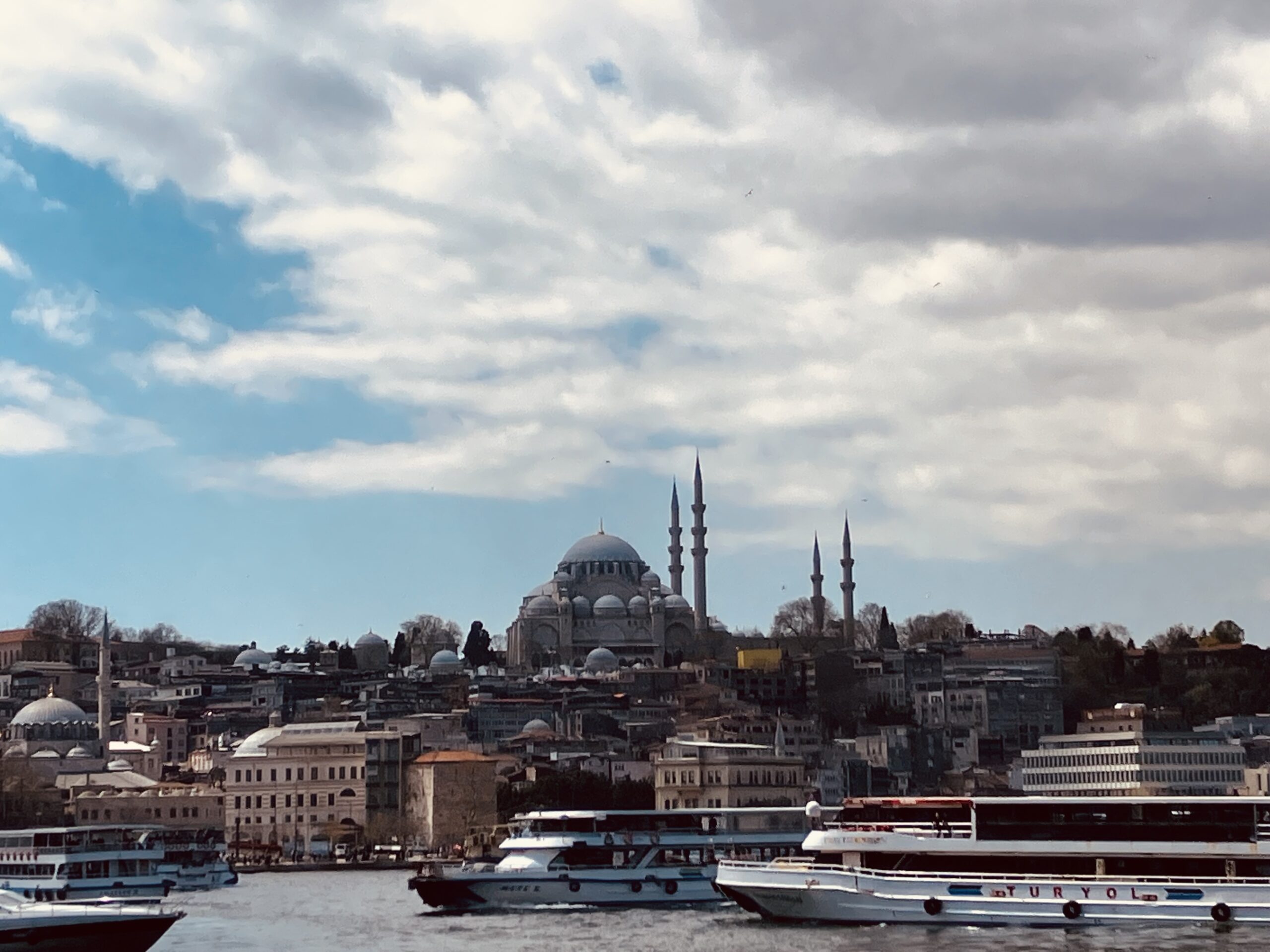
Bridging Europe and Asia, Istanbul is a city like no other.
Among its frenetic atmosphere, Istanbul preserves a historic vision: the convergence of Ottoman, Byzantine and Roman Empires in one chaotic, glorious city. With a population of 15 million, it contains roughly half the population of Australia within its radius. But you’d be forgiven for feeling surprised on a first visit: this is a place that blends ancient traditions with mosques seemingly on every corner, with a mulit-million investment into Europe’s largest airport, opened just ten years ago on the European side of the city. That’s to say nothing of its up-to-the-minute advancements and the city’s reputation as the place for cosmetic work.
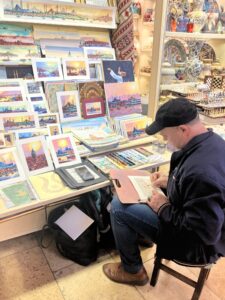
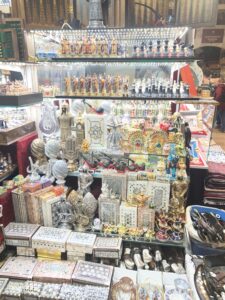
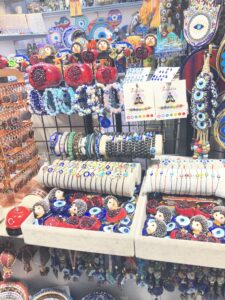
But the focus of my visit was more historic, opting to tour minarets instead. During a flying visit, it was possible to visit a few of the most lauded sites. While the Grand Bazaar lived up to its name in terms of size and construction, I have to say it felt much more modern and gentrified than the souks of Morocco. For travellers looking for a taste of bustling ancient markets, North Africa might fit this image better. To say the market was disappointing would be to overlook the purchases of a silk scarf, artwork and trinkets from many of the vendors.
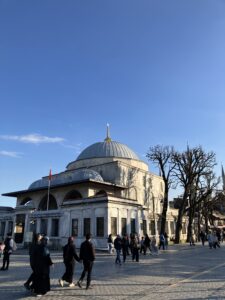
The real treasures for me were the Blue Mosque and the Hagia Sophia. The latter, completed in AD 537, stands at an impressive 1500 years old. The atmosphere in the mosque felt serene and it was important to give worshippers the space and respect they deserved while visitors could take a separate entrance and observe the higher galleries. ‘Divine Wisdom’ in Arabic, the Hagia Sophia holds within its walls centuries of stories, devotion to spiritual practice.
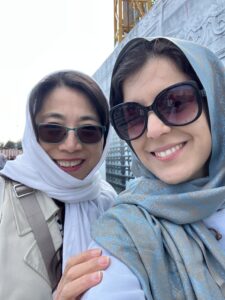
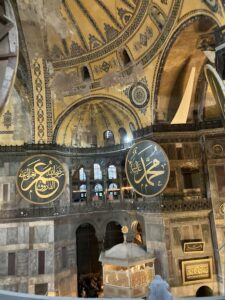
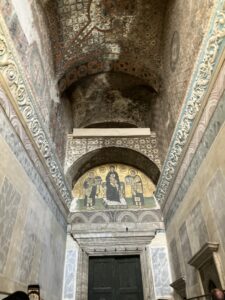
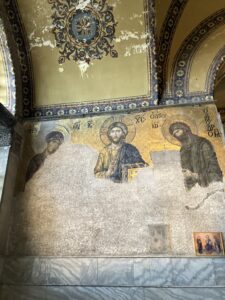
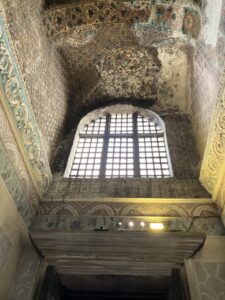
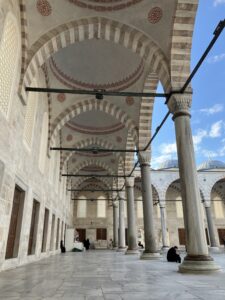
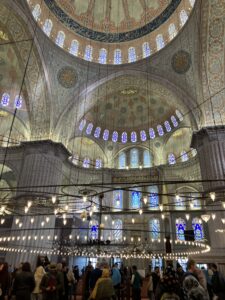
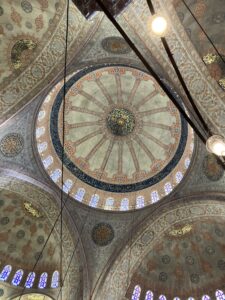
Its neighbour, the comparatively more contemporary Blue Mosque, was finished in 1647. This early 17th-century place of worship is breathtaking in its own right. More accessible than the Hagia Sophia, it’s free to enter for visitors, though again there are protocols to observe such as entering through a different avenue and giving worshippers space for prayer. But spending time in the spacious courtyard and entering the mosque to admire its lofty ceilings, you’d feel instantly elevated. Such a beautiful setting doesn’t demand your attention – a hushed awe simply comes over you and you give it nonetheless.
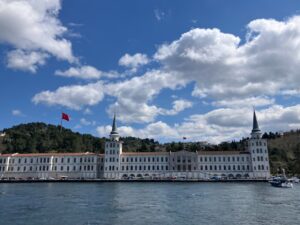
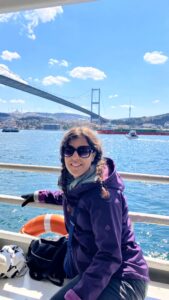
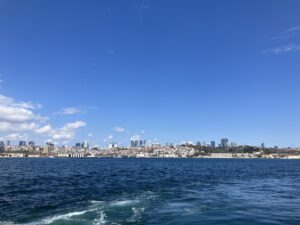
A cruise on the Bosphorus was a highlight of the trip, bridging the European and Asian sides of the vast city. Spotting landmarks like the beautiful Beylerbeyi Hasip Paşa Yalısı mosque, we felt we needed time to appreciate the huge significance of a journey spanning two continents.
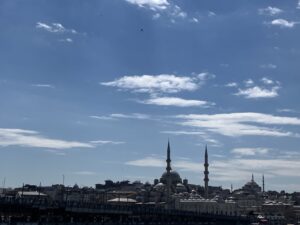
Sites I’d like to visit on a repeat visit to Istanbul include the grand Topkapi Palace, serene Sultan Ahmed Park and the Pera Museum. The latter is home to many lauded Ottoman and Byzantine pieces, including Osman Hamdi Bey’s The Tortoise Trainer. Often viewed as a satirical commentary on the bureaucracy of the Ottoman Empire and leaders’ ineffectual attempts to introduce rules to ‘untrainable’ subjects, this piece deserves the time and attention its place in the museum can give.
The city’s culinary scene can’t be overlooked, with hundreds of spots for Turkish coffee (in whose remnants, an expert teller can read your fortune for a fee). Lunch can be taken just about anywhere, but the city’s famous open buffets are an excellent choice to refuel for an afternoon of sightseeing. And Istanbul’s nightlife simply can’t be missed: ending our trip on a rooftop bar at the Grand Hotel Gülsoy in the downtown area, we overlooked the skyline by night and felt all the magic of this traditional-yet-modern, familiar-yet-exotic city.